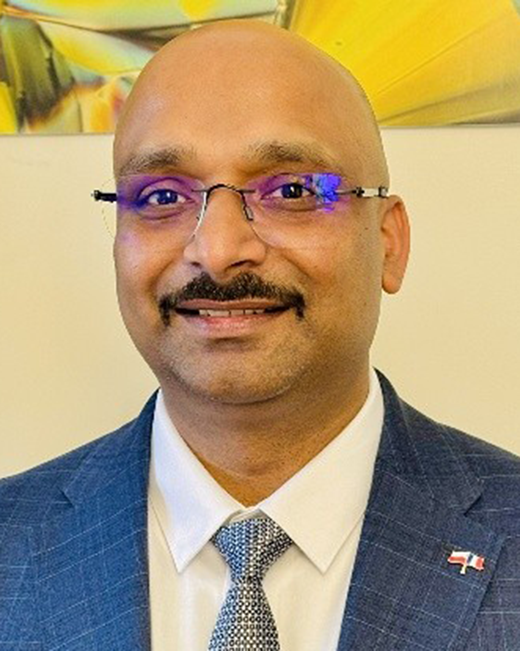
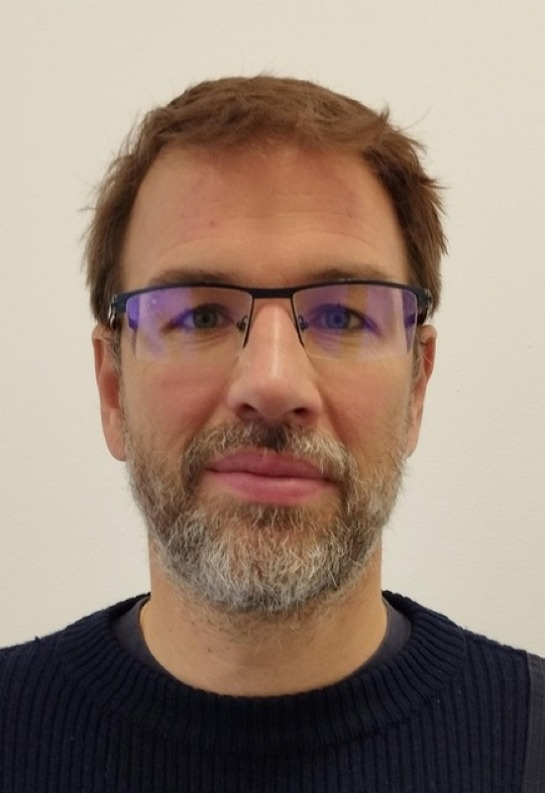
M. Singh has been recognised as one of the “Emerging Investigators 2026” by the Journal of Materials Chemistry C (RSC)
Congratulations Mr. Singh !
Dharmendra Pratap Singh is an associate professor at the Université du Littoral Côte d’Opale (ULCO), France. His current research activities are focused on columnar materials, discotics, nematics, and ferroelectric nematic liquid crystals, for studying charge transport mechanisms and their applications in energy, sensing, optoelectronics, photovoltaics, and organic electronics. He was the recipient of a Silver Medal award 2025 from the Indian Liquid Crystal Society. He received the Young Scientist Award from the Indian Science Congress in 2017. He was the recipient of the best research award by the Korean Display Society (KIDS) in 2015 and the SPIE early career award at Cambridge University in 2013. He was also awarded with a prestigious Raman-Charpak Fellowship in 2014. He has published around 120 research articles in his domain of research.
His contribution to the 2026 Journal of Materials Chemistry C Emerging Investigators collection can be read at https://doi.org/10.1039/D6TC01578F.
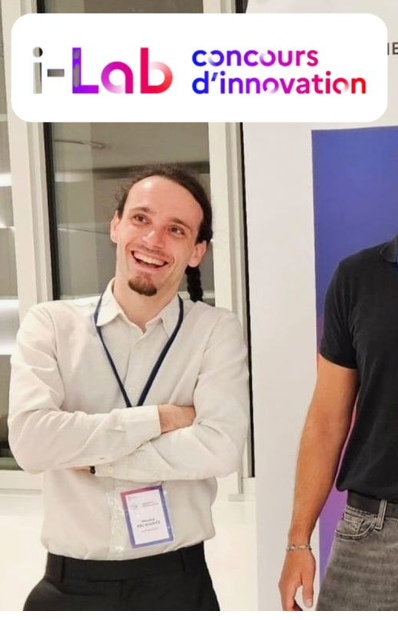
After winning the i-PhD award in 2024, the project has reached a new milestone by being named one of the 69 i-Lab winners in the 2026 edition of the Government Innovation Competitions, supported by the government as part of France2030.
This distinction marks a major milestone in Lumensium’s development and reinforces its ambition: to offer a new generation of luminescent organo-ionic scintillator materials for the detection of ionizing radiation, particularly neutrons of all energies and gamma rays.
Thanks to its Lumoxa technology, Lumensium offers high-performance, safe, compact, and durable materials with no supply chain risks to meet the needs of research, safety, defense, and the space sector, while scaling up their production.
This support will accelerate the transition of their research results into industrial solutions and enable Lumensium to continue building out its organizational structure.
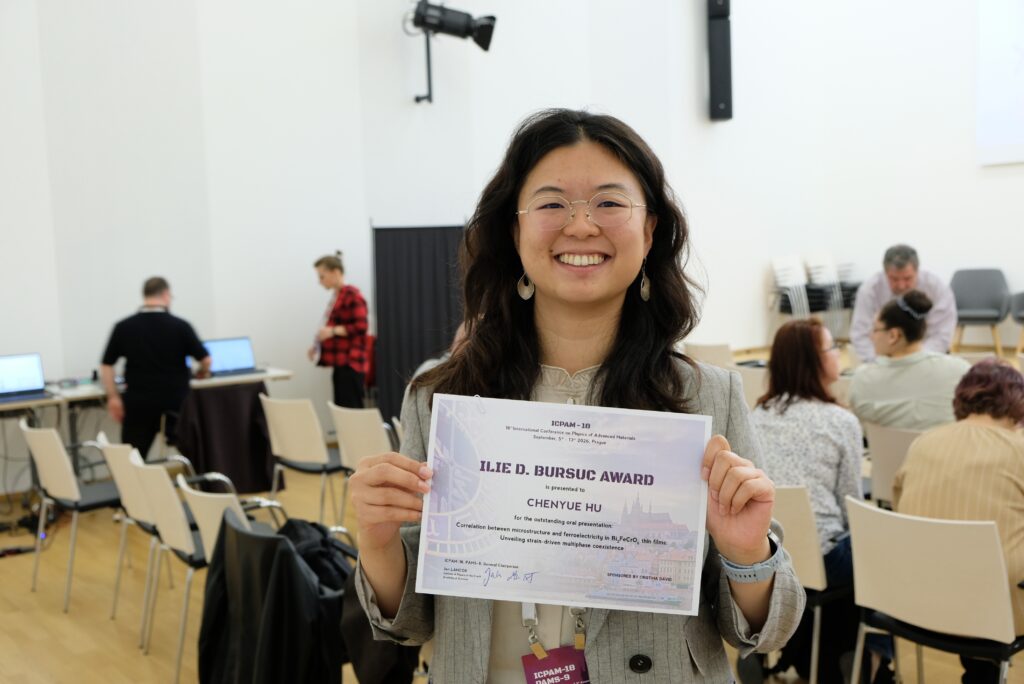
Chenyue, a PhD student at the DCMI in the ‘Thin-Film Oxides’ team, received the Ilie D. BURSUC Prize for her oral presentation entitled ‘Correlation between Microstructure and Ferroelectricity in Bi₂FeCrO₆ Thin Films: Unveiling Strain-Driven Multiphase Coexistence’
at the ICPAM-18 conference (18th International Conference on Physics of Advanced Materials), held in Prague from 5 to 13 September (https://icpams.com/main/)
Magnetism and Chemistry: A Technological Breakthrough in Magnetic Rare Earth Recycling
The Recycling Permanent Magnets: An Innovative Approach (REMMIA) project, coordinated by the CNRS at IPCMS, has recently been selected for funding under the European Innovation Council (EIC) Pathfinder 2025 programme, which had an exceptionally low success rate of just 2.15%.
REMMIA brings together the academic expertise of three research laboratories from France, Ireland, and Sweden, alongside two start-ups based in France’s Grand Est region, whose participation is crucial for the project’s industrial validation. Through an interdisciplinary approach, the consortium will combine expertise in magnetism, electrochemistry, and hydrometallurgy to develop innovative solutions for recycling some of the most critical and least recycled materials in Europe—materials that are indispensable for the production of high- performance permanent magnets.
Magnetic rare earth elements are essential components of high-efficiency electric motors, which play a central role in the transition to a green economy. Their strategic importance is also increasing in the defense sector. However, the extraction and processing of key magnetic rare earths—praseodymium, neodymium, dysprosium, and terbium—remain major technological and environmental challenges. Current purification methods are both costly and resource-intensive. The REMMIA project aims to develop breakthrough technologies that dramatically simplify rare- earth separation and purification processes. The proposed innovations are expected to reduce environmental impacts by up to a factor of 100 while achieving recovery rates above 90% and purities exceeding 99%. This fundamental research will be conducted in close collaboration with a company specializing in the collection, recovery, and dismantling of end-of-life products, enabling validation on real industrial waste streams. The project will also benefit from the expertise of a second industrial partner specialized in process scale-up, facilitating the future deployment of these separation technologies at an industrial level.
Through REMMIA, we aim to contribute to environmentally responsible industrialization while developing strategic expertise that can strengthen the European Union’s geopolitical autonomy in a highly critical and strategically important field.
Contact :Alena Gradt, european project manager (alena.gradt@ipcms.unistra.fr)
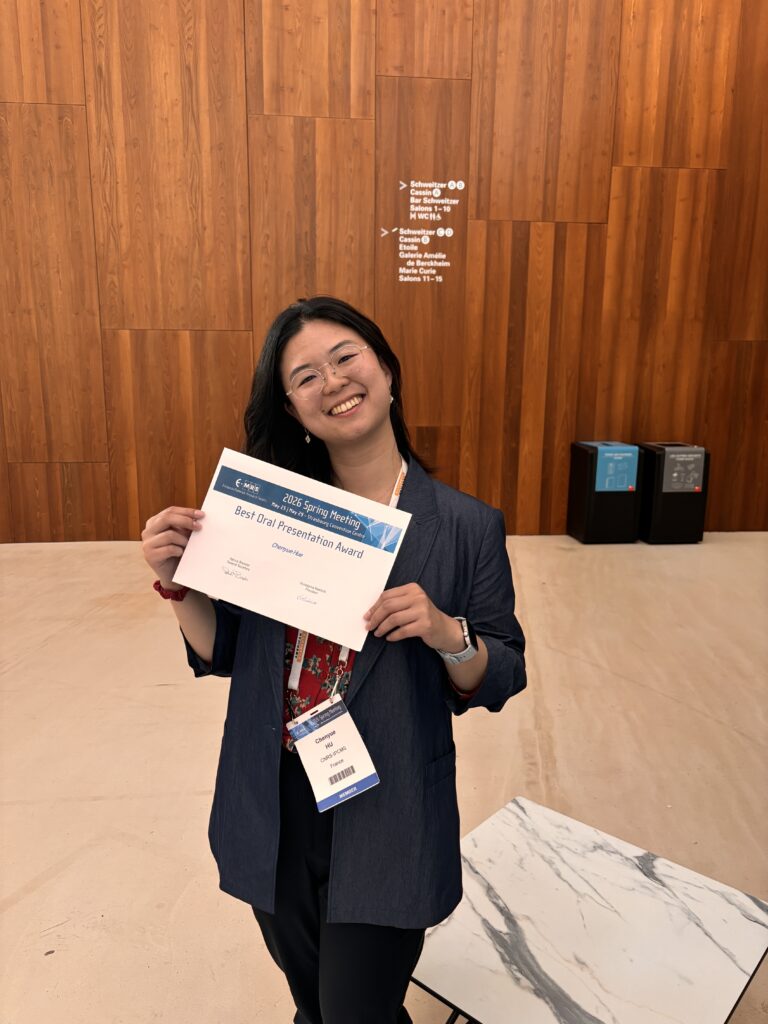
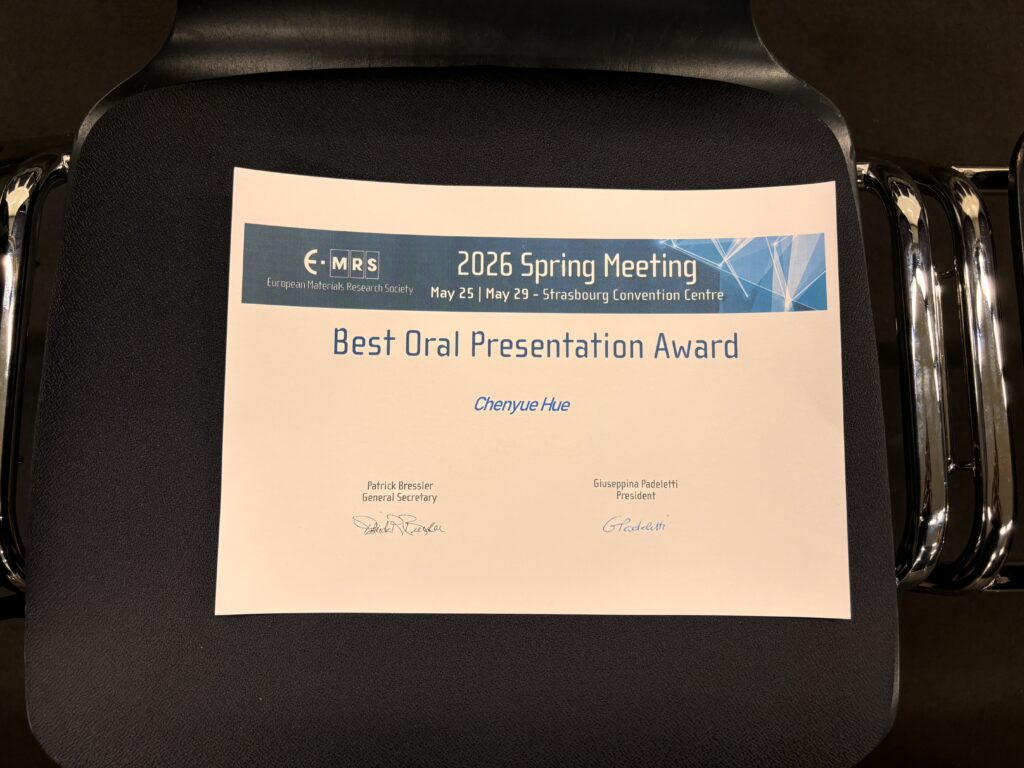
for her presentation entitled: “Imprint Modulation in Bi2FeCrO6 Heterostructures: The Roles of Interface, Defects, and Growth Direction“
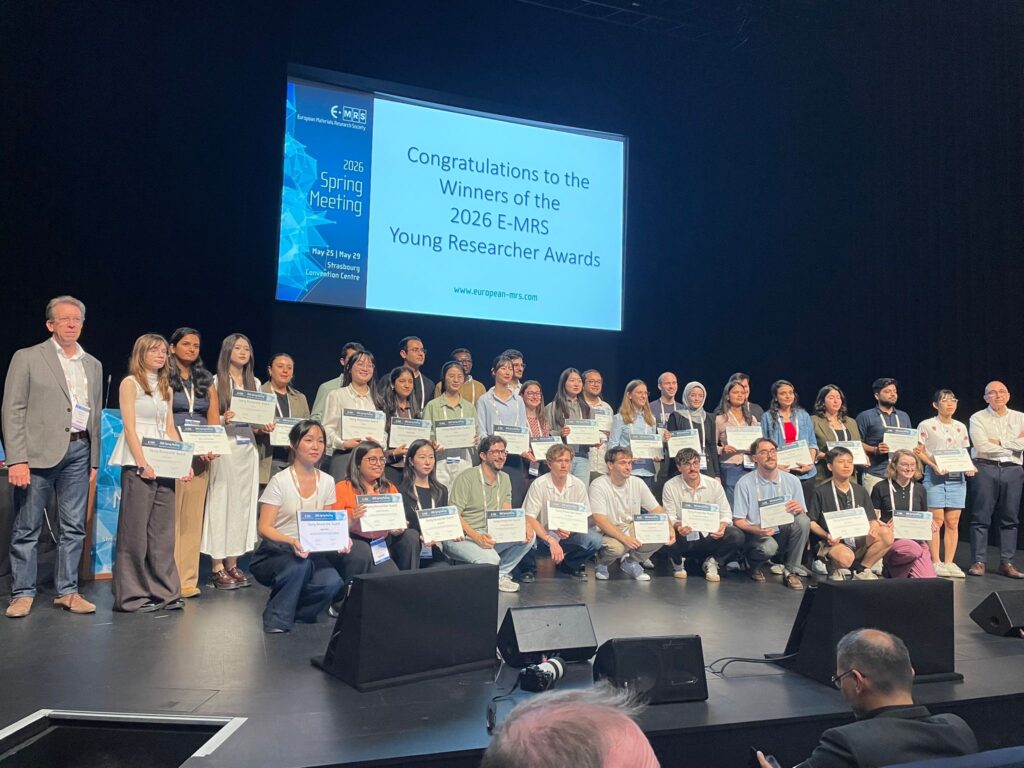
delivered at the “Symposium C: Synthesis, processing and characterization of nanoscale multi functional oxide films X and 10th E-MRS & MRS-J bilateral symposium”
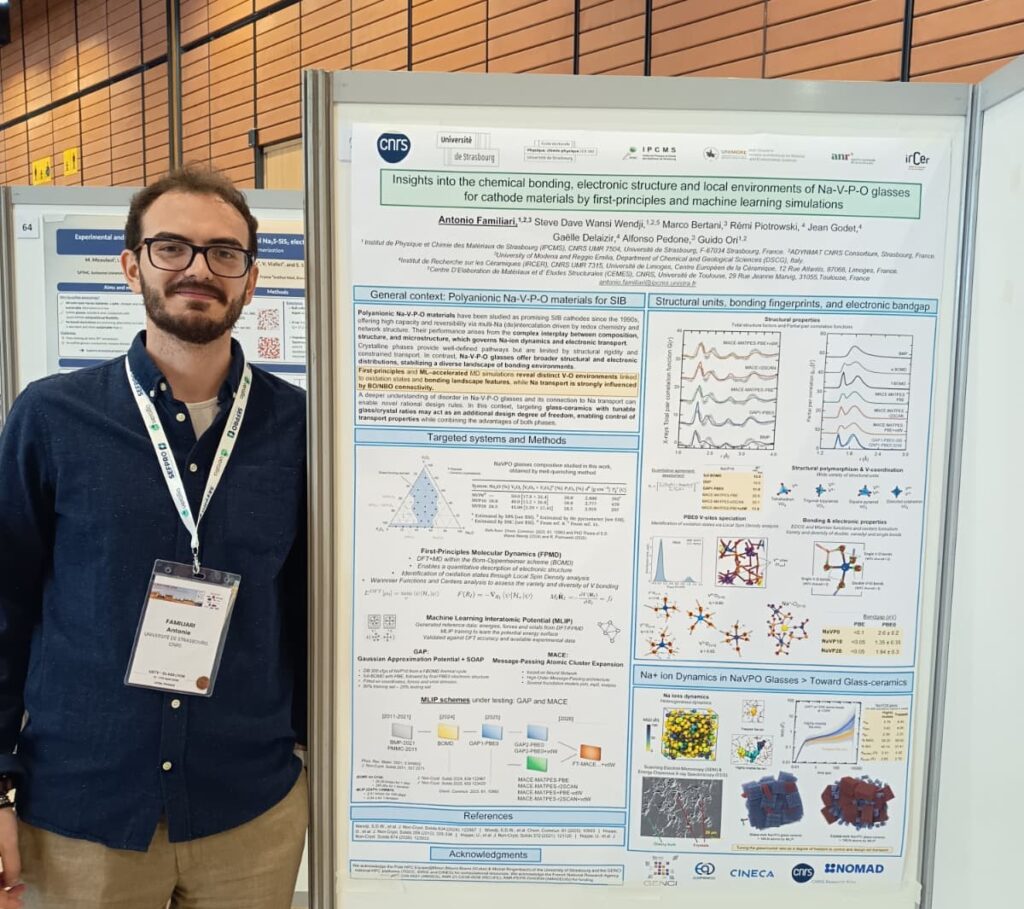
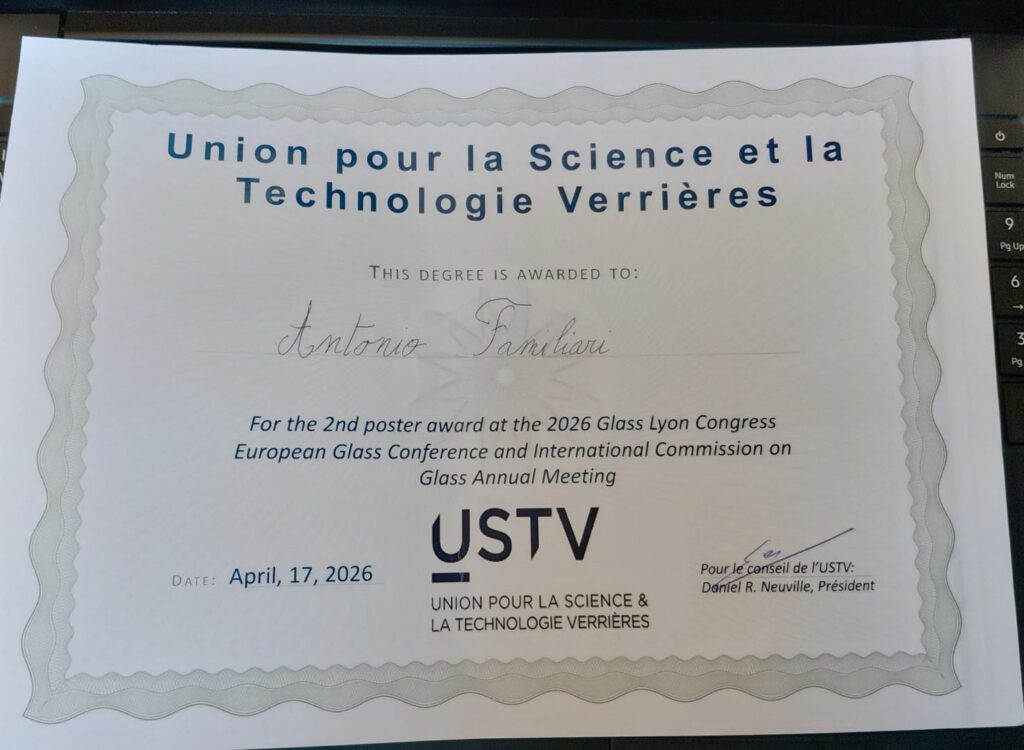
Antonio won the 2nd Poster Award presented by USTV (Union for Science and Technology in Verrières) at the International Commission on Glass – Annual Meeting: GLASS LYON 2026, with a poster entitled: “Insights into the chemical bonding, electronic structure and local environments of Na-V-P-O glasses for cathode materials by first-principles and machine learning simulations”.
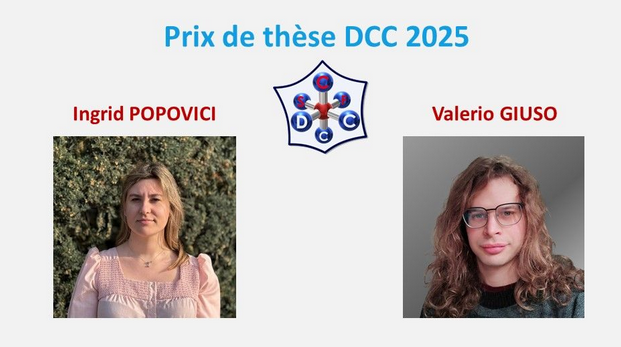
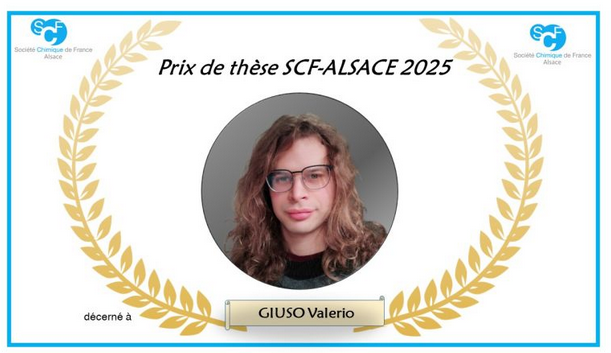
The 2025 DCC Thesis Award was jointly awarded to Ingrid Popovici and Valerio Giuso.
Valerio Giuso has been recognized for his thesis titled “Thiazoles, oxazoles, and their metal complexes: privileged scaffolds for the design of luminescent and optoelectronic materials,” which he completed under the supervision of Prof. Matteo Mauro at the Institute of Materials Physics and Chemistry in Strasbourg (IPCMS).
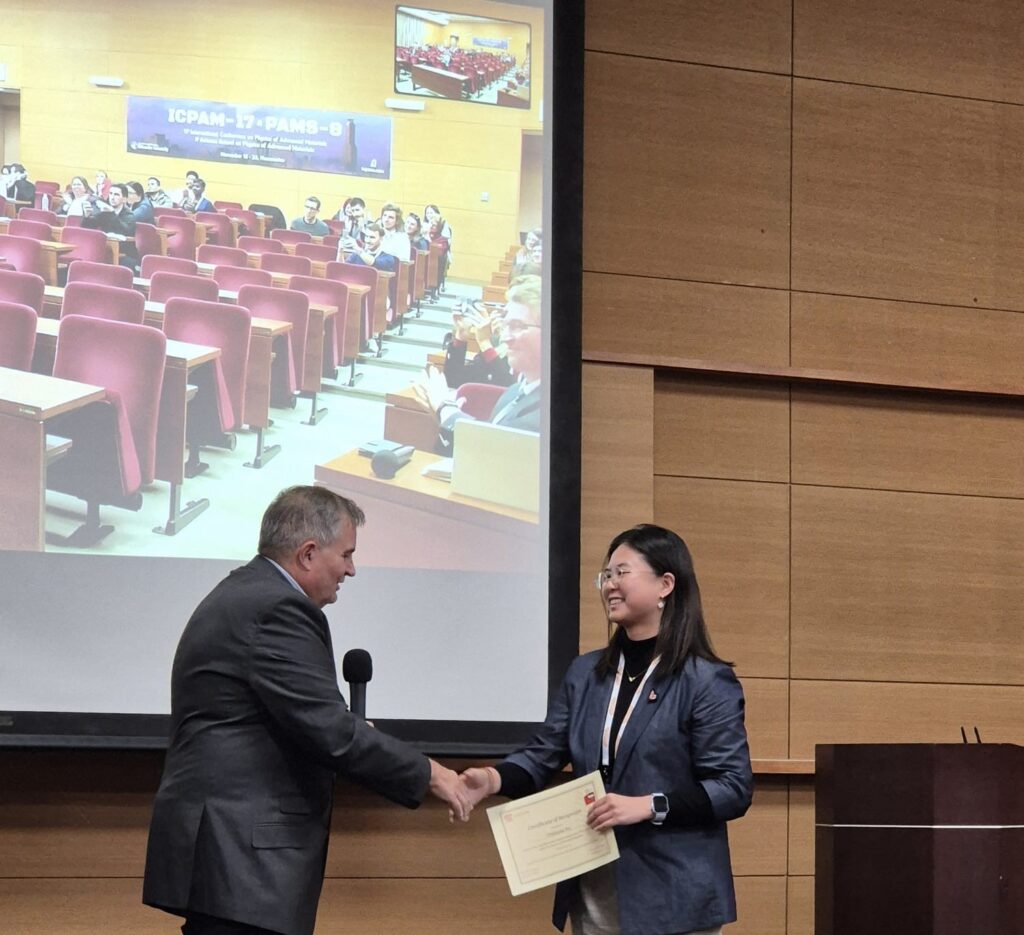
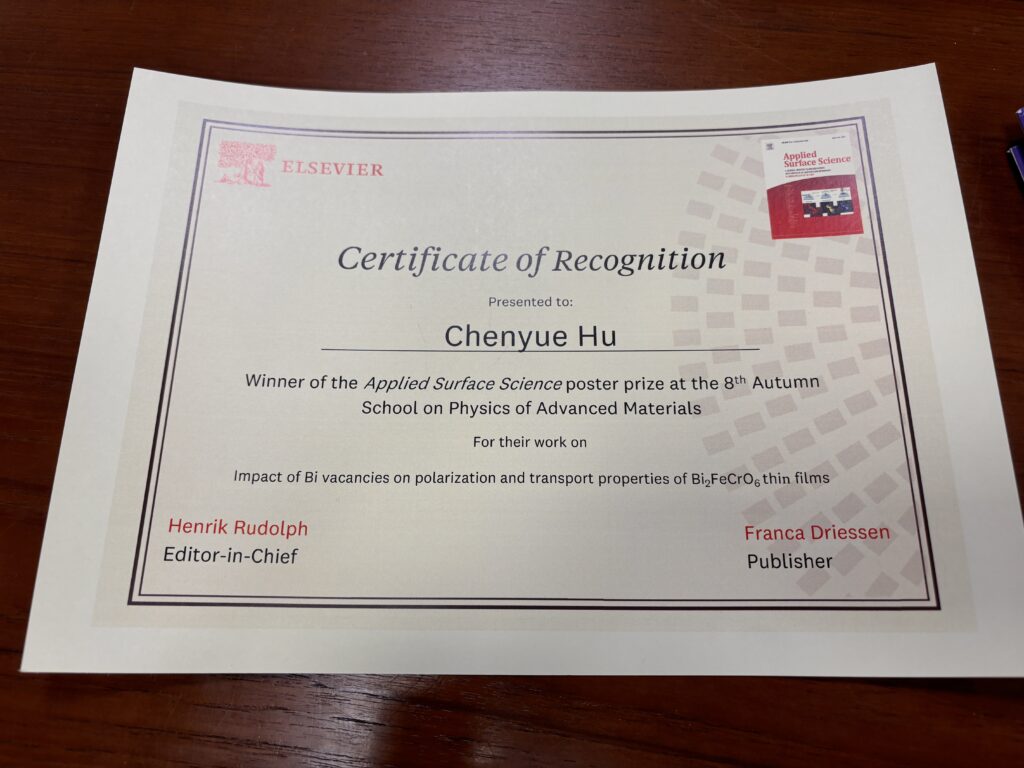
Chenyue HU, a PhD student at DCMI, participated in the ICPAM-17 & PAMS-8 conference on 16–23 November. She won the Applied Surface Science Poster Award at the 8th Autumn School on Physics of Advanced Materials for her poster entitled: Impact of Bi vacancies on polarisation and transport properties of Bi₂FeCrO₆ thin films.