

Mariana Telles do Casal (Department of Chemistry, Physical Chemistry and Quantum Chemistry Division, KU, Leuven, 3001 Leuven, Belgium)
Quantum sciences and materials seminar presented by : Rubén Seoane Souto
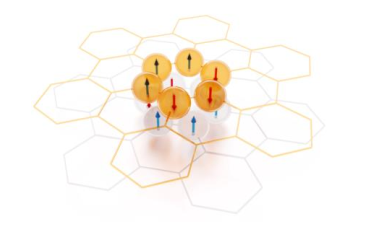
Speaker: Rubén Seoane Souto (ICMM-CSIC, Madrid)
The abstract is available there.
IPCMS seminar presented by:Andrey S. Klymchenko
Andrey S. Klymchenko (Laboratoire de Bioimagerie et Pathologies, UMR 7021 CNRS, Université de Strasbourg)
Abstract :
DCMI Seminar presented by: Elin Winkler
Elin Winkler (Magnetism and Magnetic Materials Department Bariloche Atomic Center Argentina)
Abstract
Axis 1 seminar presented by Olivier Simard
Speaker: Olivier Simard (Centre de Physique Théorique, École polytechnique & Collège de France)
Abstract
Seminar Axis 3 presented by: Prof. Rajamalli
Prof. Rajamalli (Indian Institute of Science Bangalore)
DON Seminar presented by: Saad Yalouz
Saad Yalouz (Laboratoire de Chimie Quantique de Strasbourg)
Abstract : Quantum technologies are opening new perspectives for scientific computing and the simulation of complex quantum systems. However, these advances rely on a dual challenge involving both software and hardware aspects. From a software perspective, the objective is to develop quantum algorithms adapted to emerging quantum computers. From a hardware perspective, a major challenge is to identify physical platforms capable of carrying and controlling quantum information.
It is precisely around this dual software/hardware challenge that my research activities are structured, at the interface between physics, theoretical chemistry, and information science. In a first software-oriented direction, I develop quantum algorithms for the simulation of many-body quantum systems, with applications in quantum chemistry and molecular physics. In a second hardware-oriented direction, I study complex molecular systems as potential resources for quantum technologies, particularly for quantum information transport and encoding at the nanoscale. This presentation will provide an opportunity to discuss these two research directions and the perspectives they open for the development of quantum technologies.
Seminar Axes 2 et 3 presented by : Dr. Juan A. Varela
Dr. Juan A. Varela (School of Physics and Astronomy, University of St. Andrews, UK)
Axes 4 & 1 seminar, presented by : Christina Psaroudaki
Christina Psaroudaki (Ecole Nationale Supérieure, Paris)
Quantum sciences and materials seminar presented by: Valeria Sheina
Speaker: Valeria Sheina (Institut des NanoSciences de Paris)
The abstract is available there